.svg)

Load Control for Weigh Cart Operations
Controllers manage load measurement and system coordination for accurate weigh cart operation.
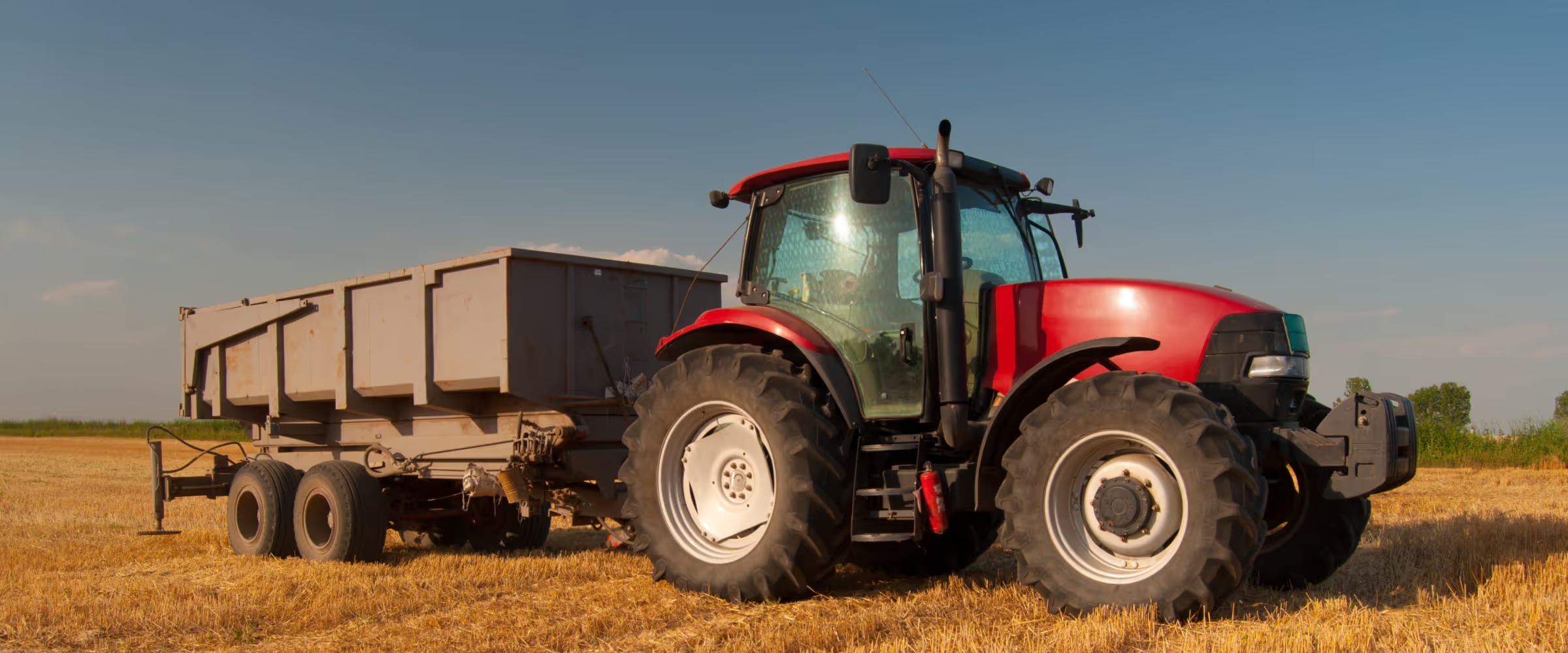
Challenges & Solutions
Explore common challenges and our solutions for common issues.

Fluctuating load readings
Uneven terrain, different chassis configurations, vehicle speed and geometry variants can all impact how accurate and stable load readings are.

Consistent weight calculations
The SMX.dms-a strain sensor measures structural deflection directly on weigh cart components, enabling indirect force and weight calculation with configurable measurement ranges, offsets and reliable CAN-based signal output.
For more complex systems, the ESX.4cl can fuse multiple sensor signals into stable weight calculations, while the ESX.4ct offers a more cost-effective controller option for simpler architectures with fewer hardware requirements.
Limited real-time feedback
Drive to keep machines as simple and accessible to farmers as possible, OEMs can be limited with respect to the perceived complexity of the sensing and control components implemented on their machine.
Real-time signal filtering
High-resolution strain data from the SMX.dms-a provides the controller with a reliable signal foundation for real-time filtering and measurement stabilization.
The ESX.4cl is best suited for advanced processing and broader communication needs, while the ESX.4ct provides a cost-effective alternative with a dual-core 300 MHz processor, 4 MB Flash, 576 kB RAM and 2 default CAN interfaces.
Operator-dependent accuracy
When using grain carts, there are a million different things that require operator attention. Relying on operator inputs to properly calibrate and record yields can lead to inaccuracies and mistakes.
Integrated data logging
By automating how load signals are captured, filtered and calculated, the control system can reduce reliance on manual operator inputs and improve repeatability across operators and shifts.
The ESX.4cl supports expanded logging and analytics for more advanced systems, while the ESX.4ct can support simpler data handling with 32 kB EEPROM and optional expansion up to 284 kB.
Data inconsistency
Accurate, consistent load data helps support harvest logistics, yield tracking, inventory management and precision agriculture workflows while giving operators and OEMs greater confidence in the information being used for decisions.
Improved operator confidence
Consistent measurement workflows help operators trust weight data and help OEMs deliver a more repeatable user experience across different cart configurations.
The ESX.4cl is preferred for higher sensor counts, advanced communication and greater logging requirements, while the ESX.4ct offers a more cost-effective path with fewer inputs/outputs, less memory, one sensor supply and lower functional safety capability.
Related Products
Discover how others have solved their toughest challenges
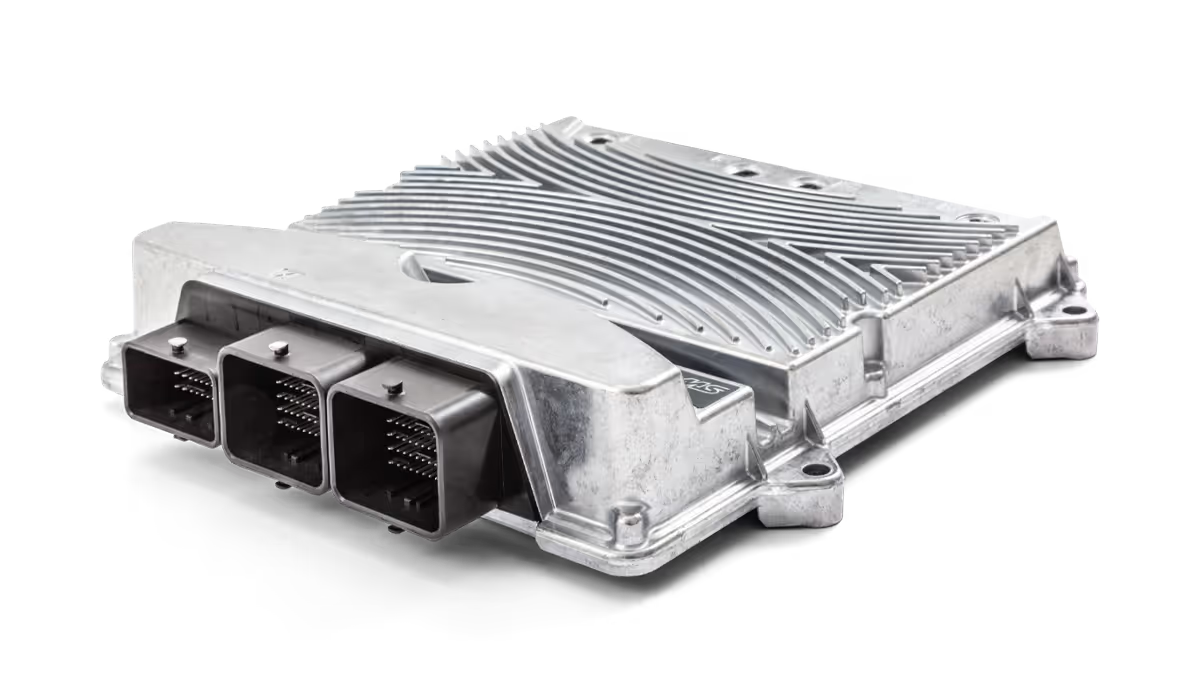
ESX.4cl
High-performance central controller
A powerful central controller for complex weigh cart architectures requiring advanced processing, higher I/O capacity and broader machine integration.
- Multicore 300 MHz processor supports real-time filtering, sensor fusion and weight calculation logic.
- Up to 60 inputs and 53 outputs enable integration of multiple load sensors, operator interfaces and machine functions.
- Multiple communication interfaces, including CAN and optional Ethernet, support integration into modern agricultural machine networks.
- Functional safety support up to SIL2, PL d and ASIL B makes it suitable for more advanced or safety-relevant load-control applications.
Ideal role – Central controller for advanced weigh cart systems with higher sensor counts, data logging needs and network integration requirements.
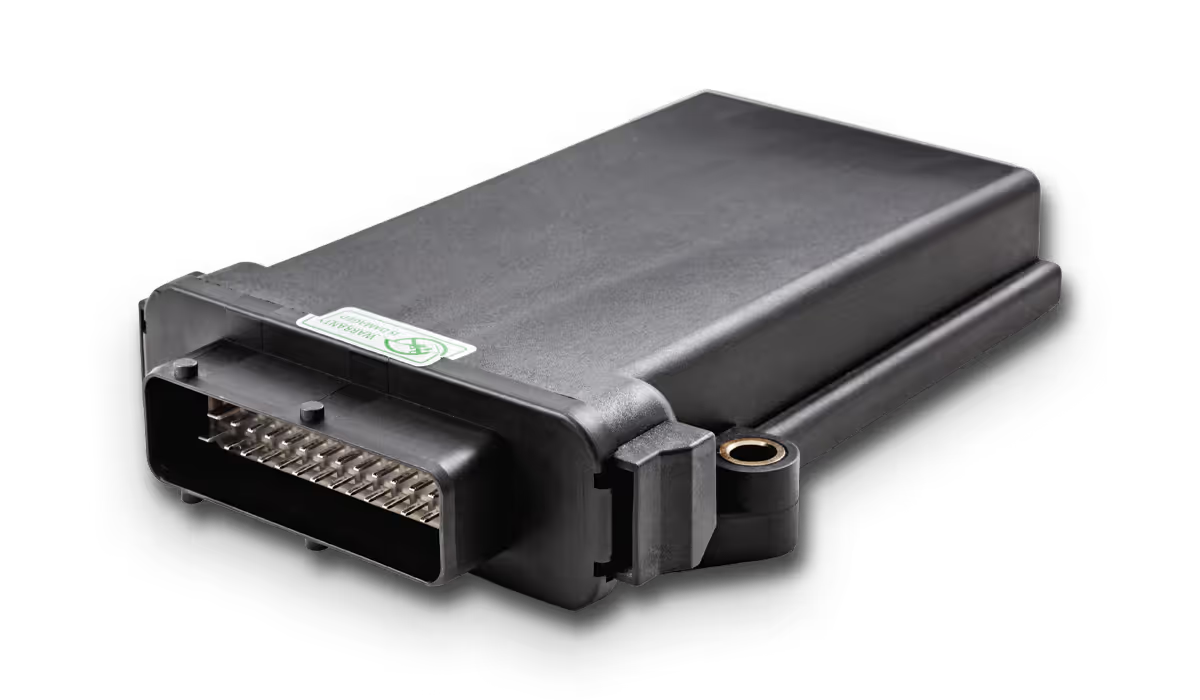
ESX.4ct
Cost-effective compact controller option
A compact controller option for less complex weigh cart systems where cost, size and essential control functionality are key considerations.
- Dual-core 300 MHz processor with 4 MB Flash and 576 kB RAM supports real-time control for simpler load measurement architectures.
- Variants with 14, 18 or 22 inputs and 13, 9 or 5 outputs offer scalable I/O options, but with less expansion capacity than the ESX.4cl.
- Supports 2 default CAN interfaces, optional third CAN, ISOBUS ISO 11783-3 and flexible programming in C, MATLAB Simulink or IEC 61131-3 environments.
- Best suited for cost-sensitive designs, with hardware limitations including fewer inputs/outputs, less memory, one sensor supply and PL b safety capability.
Ideal role – More cost-effective controller for simpler weigh cart applications that do not require the full I/O, memory or safety capability of the ESX.4cl.
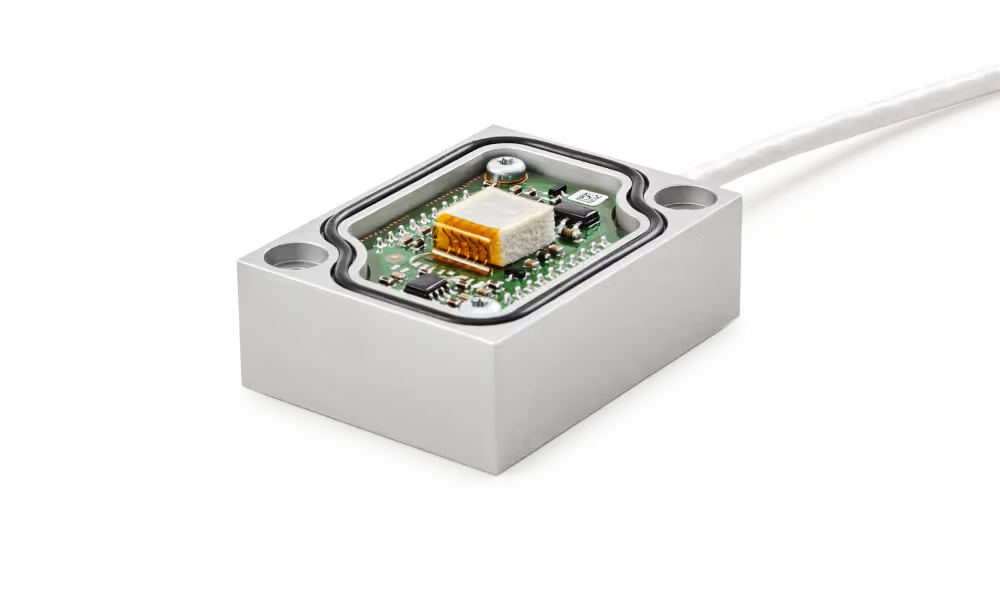
SMX.dms-a
Strain sensor for load measurement
A rugged, high-precision strain sensor designed for indirect force and weight measurement in harsh environments.
- Measures structural deflection on metal components to support indirect force, weight or vibration measurement.
- Adjustable measurement span and configurable offset support calibration across different cart sizes, structures and load ranges.
- CAN output, optional 4–20 mA output and high signal-to-noise ratio support reliable integration into controller-based load systems.
- IP6K5 / IPX7 / IPX9K protection and -40°C to +85°C operation support agricultural field conditions.
Ideal role – Primary sensing element for real-time load measurement on weigh cart structures.
Improve weighing accuracy
Get reliable load measurements with smarter sensing and control built for demanding weigh cart operations.